Maria Panina’s photography begins with movement.
Dance, gesture, posture, and physical connection sit at the center of her artistic practice. Whether she is photographing a dancer, a beauty subject, a fashion model, or two people who share a long history, Panina looks for the moment when the body communicates beyond a posed expression.
Her collaborators often come from dance, fitness, modeling, acting, and other movement-aware creative backgrounds. These experiences shape the way they occupy space in front of the camera. A hand can suggest direction. A shoulder can change the balance of a portrait. Fabric can extend a gesture. Stillness can carry the tension of movement that has just ended: or is about to begin.
This interest in the body in motion was central to Quiet Strength, Panina’s first solo exhibition, which opened on July 1, 2026, at El Barrio Art Space in New York City. The exhibition presented 28 photographs exploring trust, vulnerability, resilience, movement, and human connection. A live dance performance by Shoko Tamai extended those ideas into the gallery itself.
Read more about Quiet Strength at El Barrio Art Space.
Movement as a photographic language
Photography freezes time, but Panina’s images rarely feel static. The body remains connected to what happened immediately before the exposure and what might happen next.
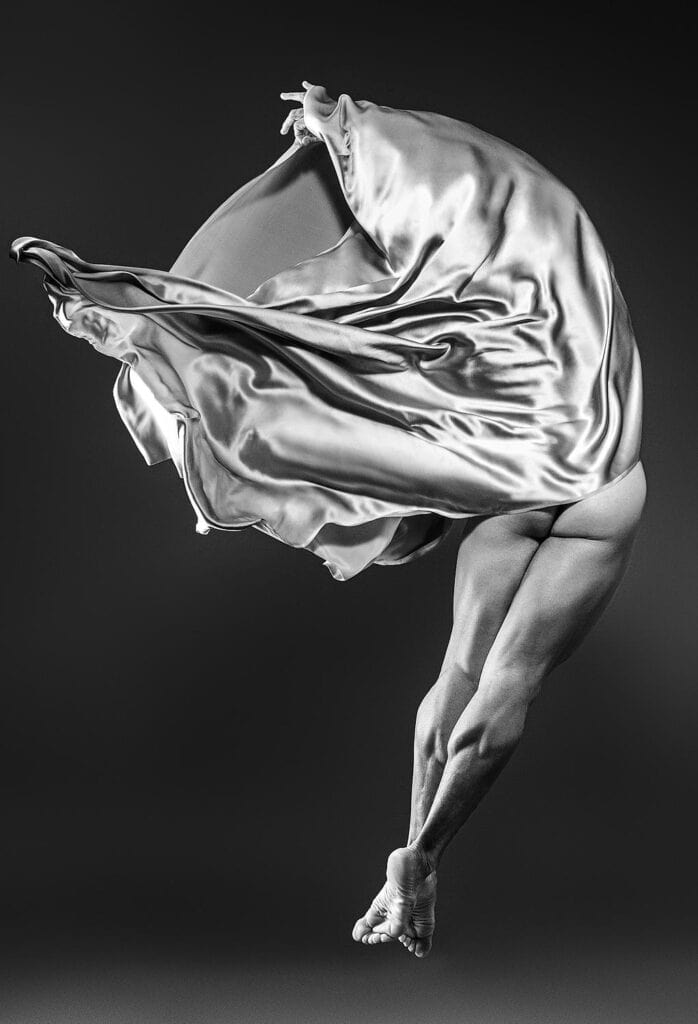
Her movement studies focus on this suspended interval. A figure may be folded, extended, obscured, or caught in a position that feels both intentional and instinctive. The image does not document a complete dance. Instead, it preserves a fragment of physical thought.
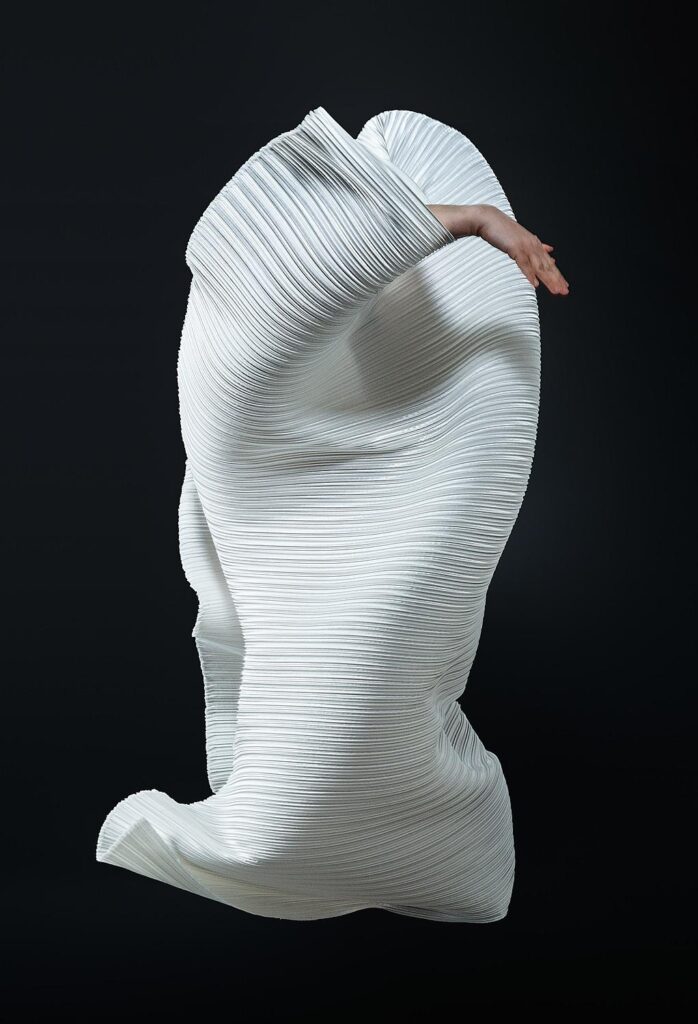
Movement Study. Cocoon
This approach requires collaboration. Panina’s subjects are not simply directed into fixed positions; they participate in discovering the image. Movement can be improvised, repeated, slowed, or allowed to develop naturally. The resulting photograph depends on the subject’s awareness of their own body and on the photographer’s ability to recognize a precise visual moment.
For dancers, this process offers room for physical intelligence. For models and actors, it creates a way to work with presence rather than relying only on conventional posing. For beauty and hair subjects, it makes styling part of a larger composition in which shape, silhouette, and movement work together.
Sculptural portraits and the body in light
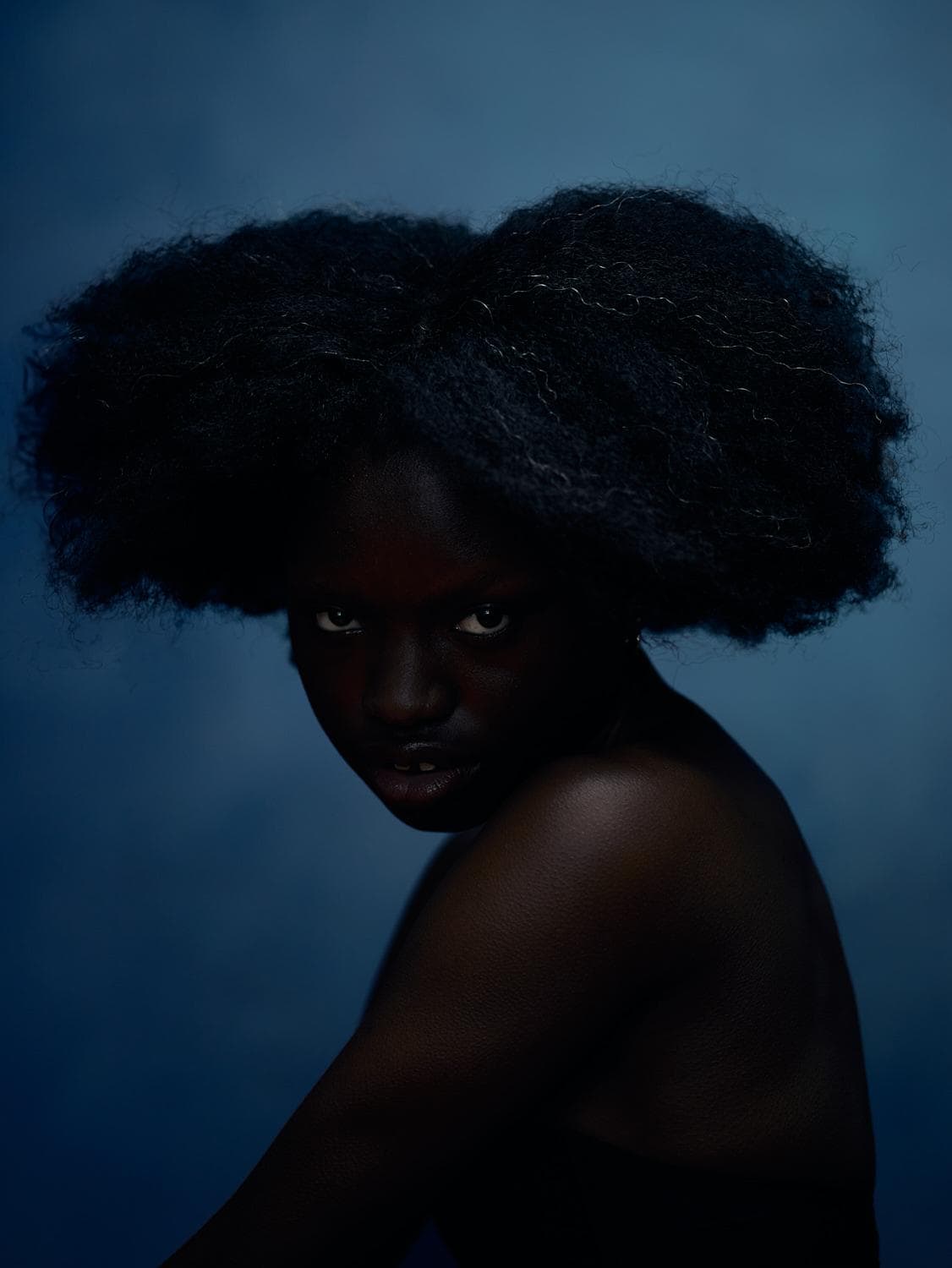
Panina treats the body as a sculptural form. Light defines its planes, edges, curves, and negative spaces. It can isolate a face, reveal the architecture of a hairstyle, or turn a moving garment into an extension of the subject.
Her lighting is often dramatic, with strong directional contrast and deep shadows. This creates a sense of volume and gives the image a physical presence. The body is not flattened into a surface. It becomes a structure shaped by light.
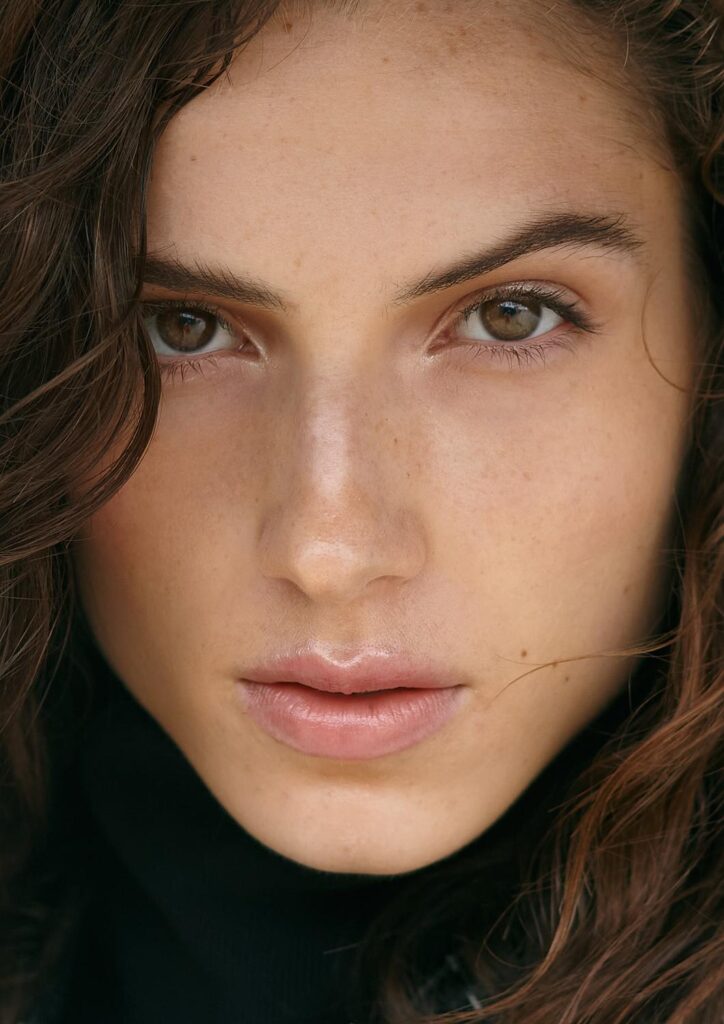
Rain, 2017
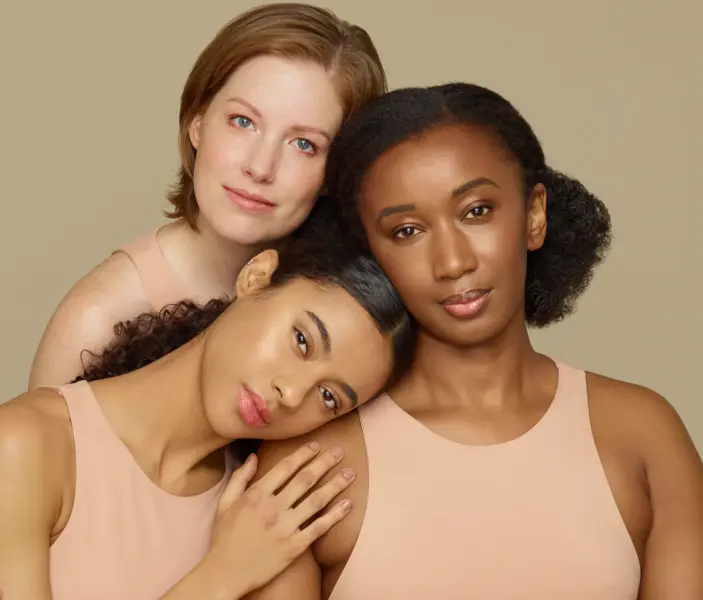
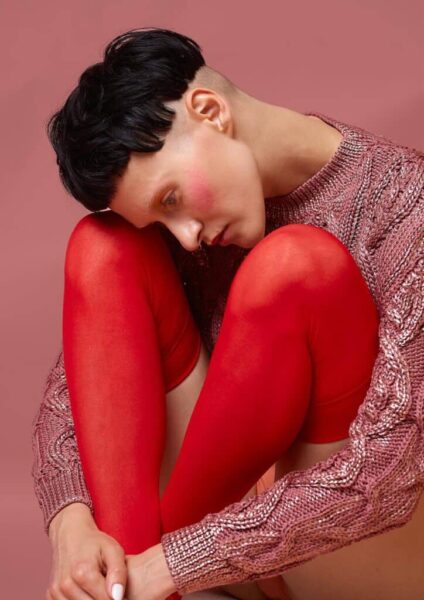
The same principles support commercial photography. Beauty imagery depends on precision: the texture of skin, the finish of makeup, the line of an eye, and the construction of hair all need to remain visible. Fashion imagery depends on form: the silhouette of a garment, the behavior of fabric, and the relationship between clothing and body must read clearly.
Movement adds another dimension to both. Hair can lift, spread, or become architectural. Fabric can create a second silhouette. Makeup can be photographed not only as a surface detail but as part of a complete visual identity. A commercial image can remain clear and useful while retaining a more developed artistic point of view.
The Connection Project
The Connection Project, Panina’s ongoing study of intimate partners and long-term collaborators, was at the heart of Quiet Strength.
The series examines how trust becomes visible through physical relationships. Panina often photographs people who know one another deeply, allowing the familiarity between them to shape the session. Their connection may appear through proximity, shared weight, mirrored gestures, or a willingness to move without self-consciousness.
Explore The Connection Project.
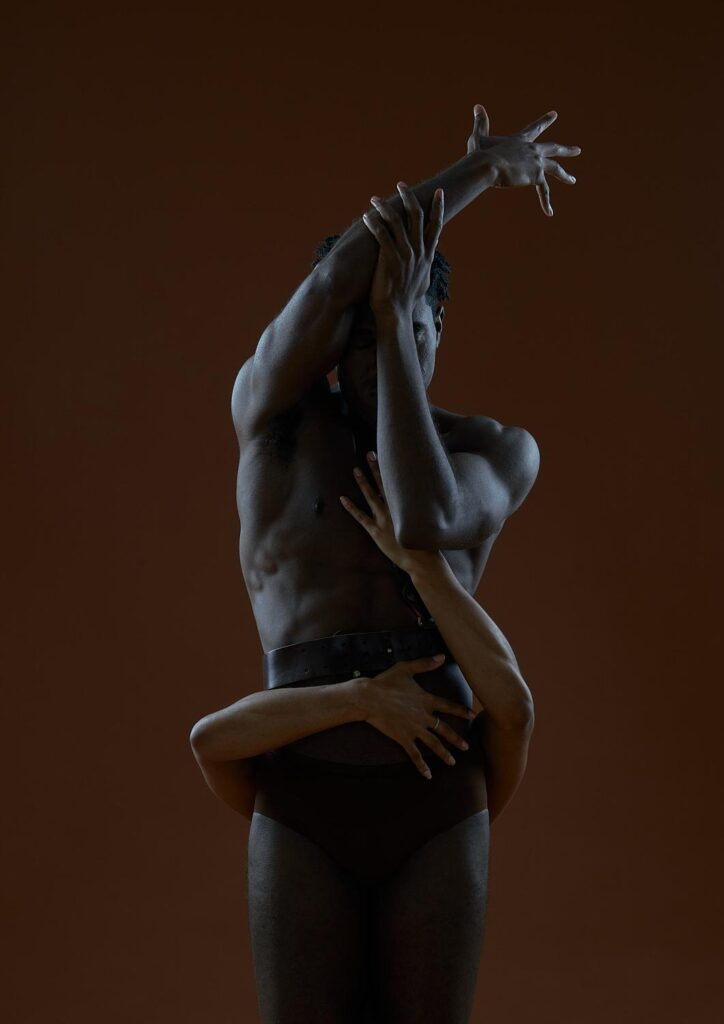
Myriam & Tislarm, 2019
The photographs are not conventional couple portraits. They are studies of relationship as a physical language. One person’s movement affects the other. A gesture can be answered, resisted, supported, or repeated. The image emerges from that exchange.
This method connects directly to Panina’s work with dancers and other performers. Dance is built on awareness: of balance, timing, space, and another body. The same awareness can transform a portrait session. When subjects understand how their bodies occupy the frame, they can create images with greater clarity and intention.
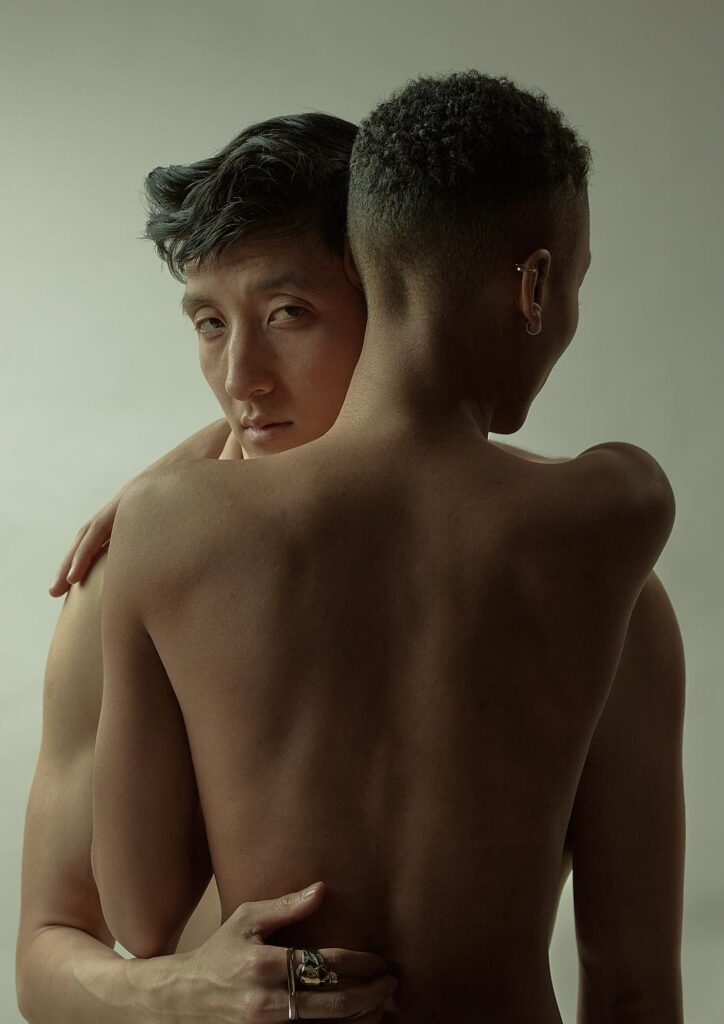
Eric & Iman, 2017
The Connection Project also reflects Panina’s broader interest in collaboration. The photographer shapes the light, composition, and direction, but the subject contributes their own history, physicality, and response. The final image is created between people.
From fine art practice to commercial photography
Panina’s fine art work provides a foundation for commissioned photography in fashion, beauty, hair, and editorial environments.
A campaign image needs to communicate a product, collection, or identity. It may need to show a specific hairstyle, makeup finish, garment, or beauty result. At the same time, it must hold attention and establish a distinctive visual world.
Panina’s experience with movement helps bring these requirements together. She understands how to make a subject look dynamic without losing detail. She can use a change in posture to clarify a garment, introduce motion into a beauty portrait, or create a stronger relationship between hair shape and the surrounding composition.
For hair brands, this can mean treating the hairstyle as a sculptural element rather than a finishing detail. For beauty brands, it can mean combining close attention to skin and makeup with a more expressive use of gesture and light. For fashion brands, it can mean building images around the movement of fabric, the rhythm of a pose, or the structure of a silhouette.
The result is photography with commercial clarity and an editorial point of view.
Collaboration with movement-aware subjects
Panina’s collaborators bring different kinds of physical knowledge to the studio. A dancer may understand weight shifts and extension. A fitness professional may bring control, strength, and balance. An actor may work through emotional transitions in the body. A model may understand the relationship between pose, styling, and camera angle.
These backgrounds do not produce one uniform style. They create possibilities.
Panina’s role is to identify what is specific to each person and build the image around it. The session can move between direction and improvisation, between a precise shape and an unexpected response. The goal is not simply to make the subject appear active. It is to make movement meaningful within the frame.
This sensitivity is particularly important in beauty and fashion photography, where the subject, stylist, makeup artist, hair artist, photographer, and creative director must work as one visual system. Every element affects the others. A hairstyle changes the outline of the head. Makeup changes how light moves across the face. Fabric changes the rhythm of the body. The image becomes strongest when those decisions are considered together.
A continuing study
Quiet Strength brought together movement studies, sculptural portraits, images from The Connection Project, and other works that examine presence and form. Its live dance performance by Shoko Tamai made the relationship between photography and movement visible in another way: one medium preserved the body in a single frame, while the other allowed the body to unfold through time.
That relationship continues throughout Panina’s work. Her photographs are concerned with what a body can express through shape, proximity, tension, stillness, and light.
For collectors, these images form part of an evolving fine art practice. For fashion and beauty brands, they demonstrate an approach to commissioned photography grounded in collaboration, structure, and visual precision. For dancers, hair artists, makeup artists, and performers, they offer a photographic space where movement and transformation can remain central.
View the Quiet Strength exhibition works and explore Maria Panina’s commercial and editorial photography.