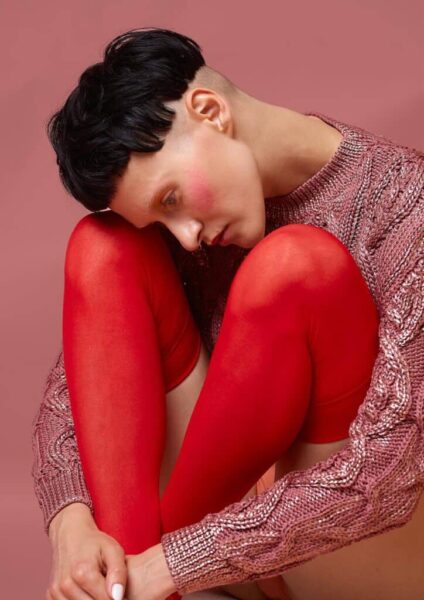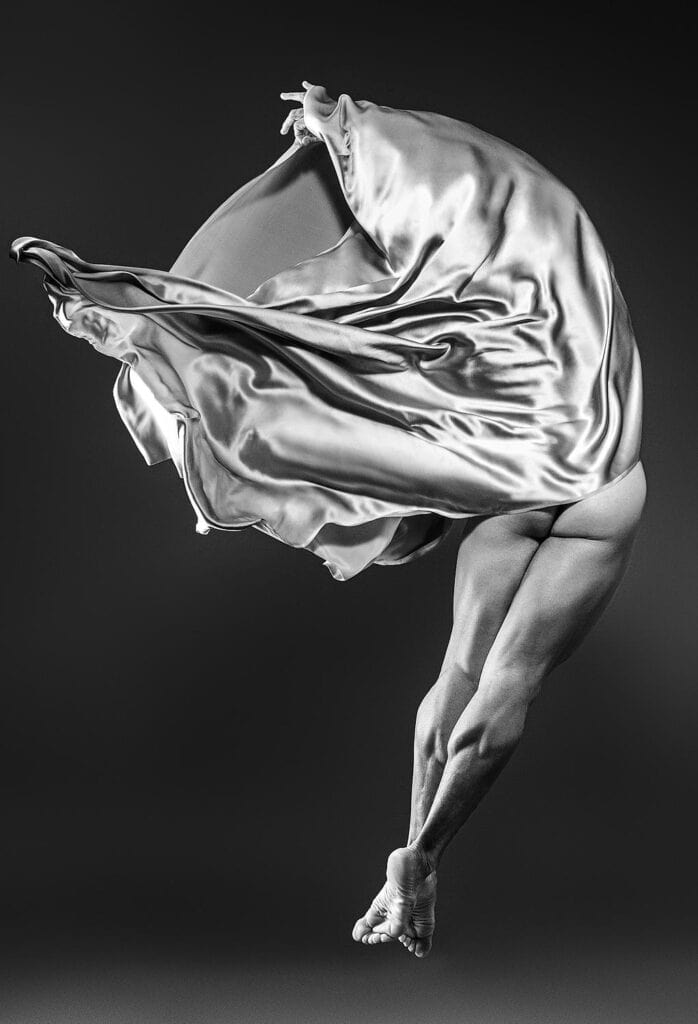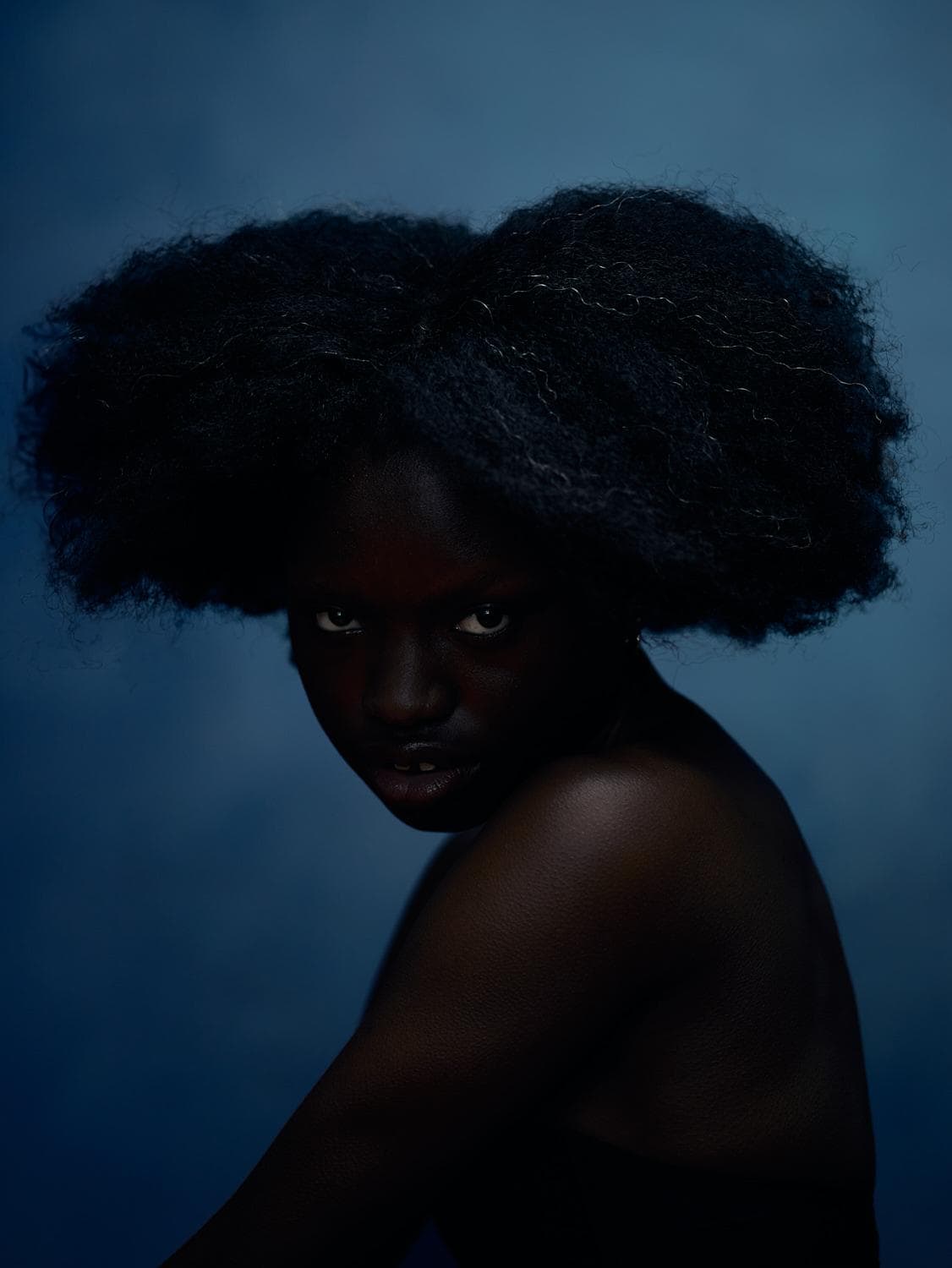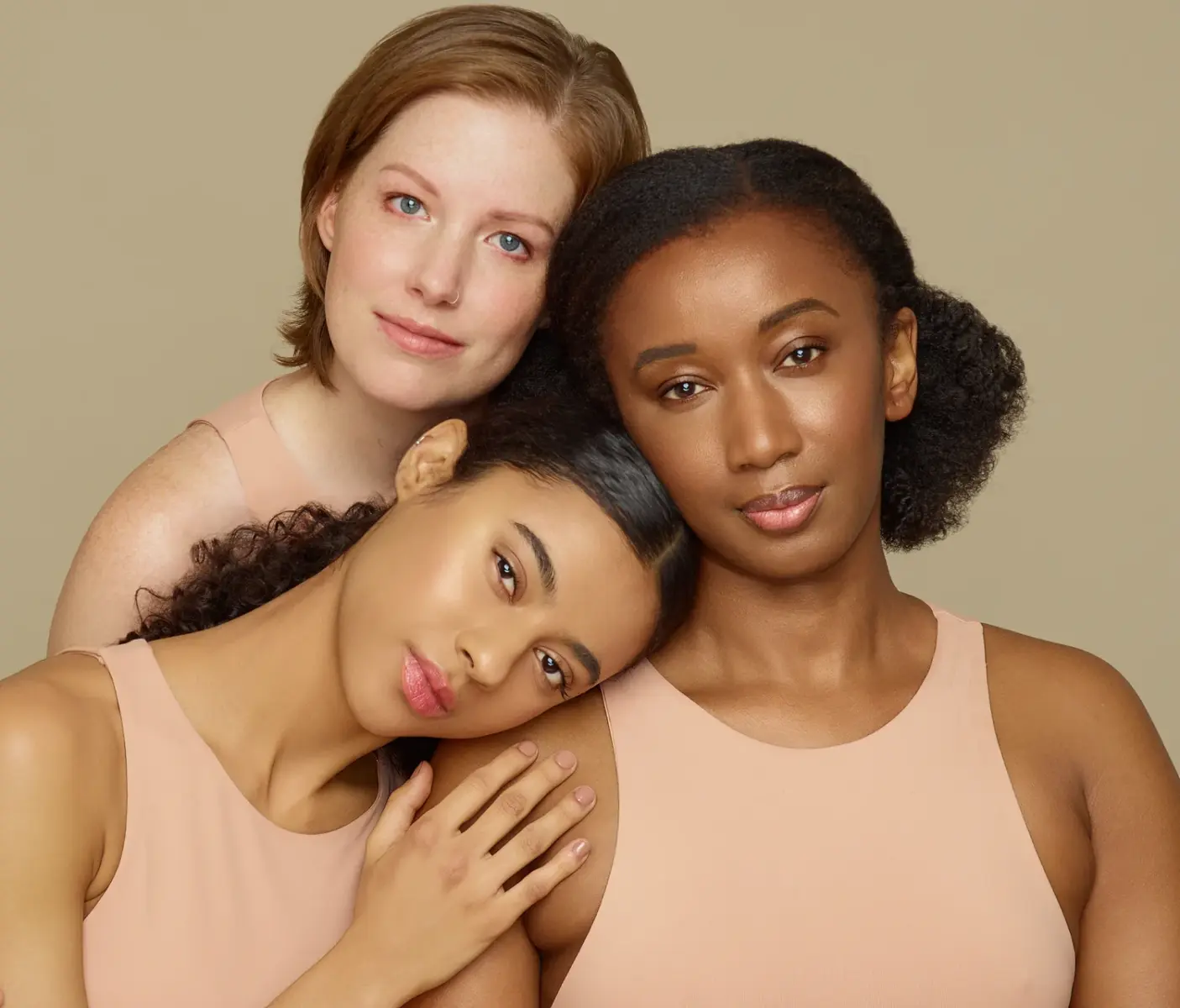
Maria Panina’s skincare project Skin / Texture / Ritual approaches beauty photography as both portraiture and material study. The series begins with the presence of the face and the individuality of skin, then moves closer into the surfaces that shape a skincare ritual: creams, transparent gels, serum drops, gold eye masks, and reflective oils. Rather than treating products as separate commercial objects, the photographs place them in direct visual conversation with the body, where texture becomes as expressive as gesture.
At the center of the project is the idea that skincare is not only seen through results, but through contact, sheen, softness, and subtle shifts in light. Bare skin, freckles, dewy finishes, and varied skin tones are rendered with the same care as the products themselves. This creates a visual language in which ritual feels intimate and tactile, built from small moments and changing surfaces rather than spectacle.
Inclusive Casting and the Presence of Bare Skin
The opening portraits establish the project’s quiet confidence through inclusive casting and a restrained beauty approach. Different skin tones are photographed within the same warm palette, allowing the series to feel cohesive while still preserving the specificity of each face. There is no heavy visual separation between complexion, expression, and atmosphere; each portrait feels grounded in natural texture and in the calm focus of the sitter.
This attention to bare skin is essential to the story. Freckles, natural luminosity, and the living surface of the face are not corrected away or treated as background details. Instead, they become part of the composition. In a beauty landscape often driven by polish alone, the project makes room for skin to exist as skin: soft, dimensional, and individual.
Texture as a Visual Language
As the series moves inward, texture becomes the main subject. Light catches transparent gels differently than it catches cream, serum, or oil, and each material creates its own emotional and visual temperature. Maria Panina photographs these differences with a fine-art sensitivity that turns product studies into sculptural images.
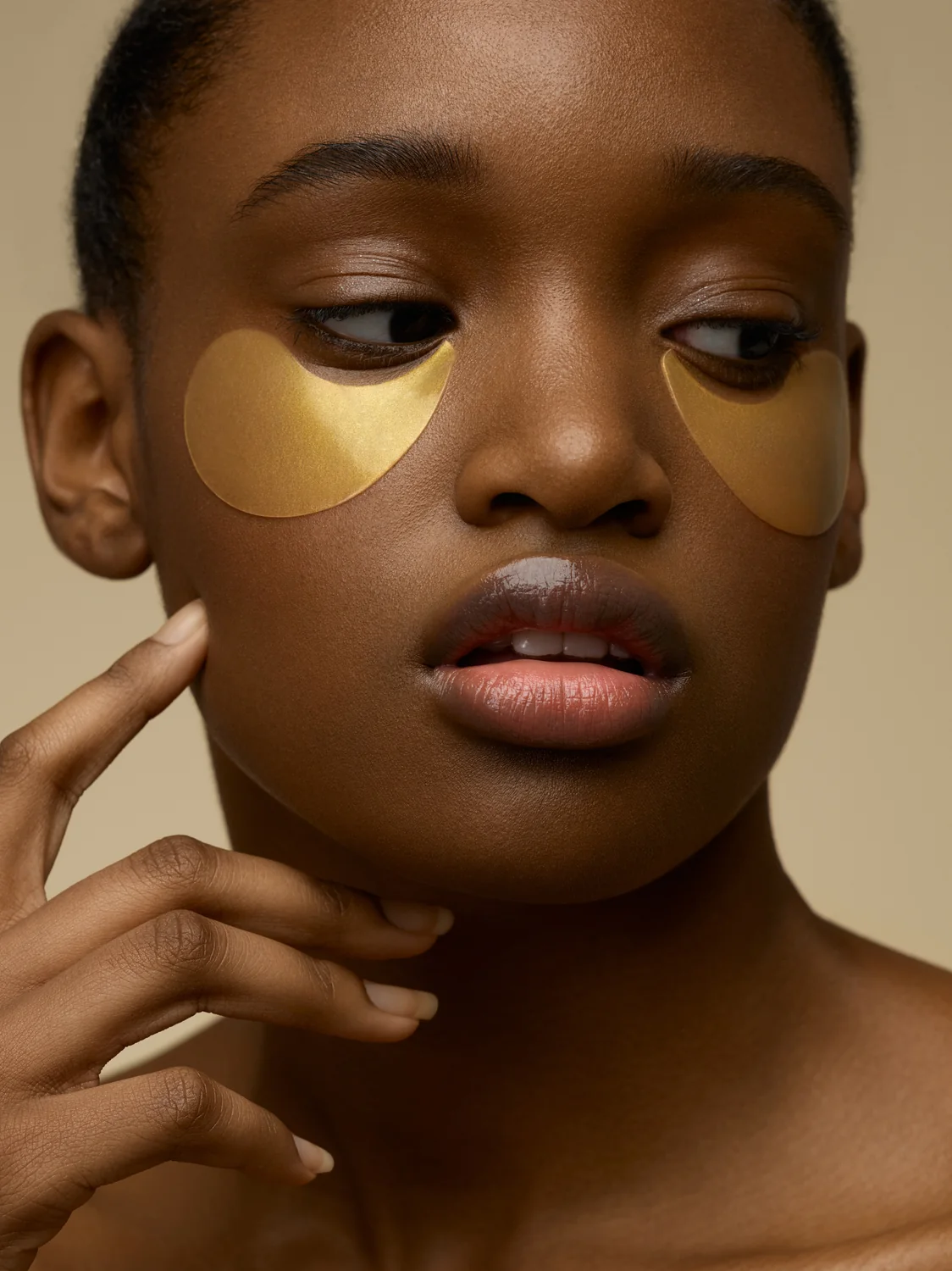
The gold eye masks introduce a reflective surface that feels both graphic and tactile, balancing softness in the skin with a metallic accent. The effect is polished without becoming distant. In the same way, transparent serums and gels hold light lightly, creating highlights that feel fluid and alive rather than glossy for their own sake.
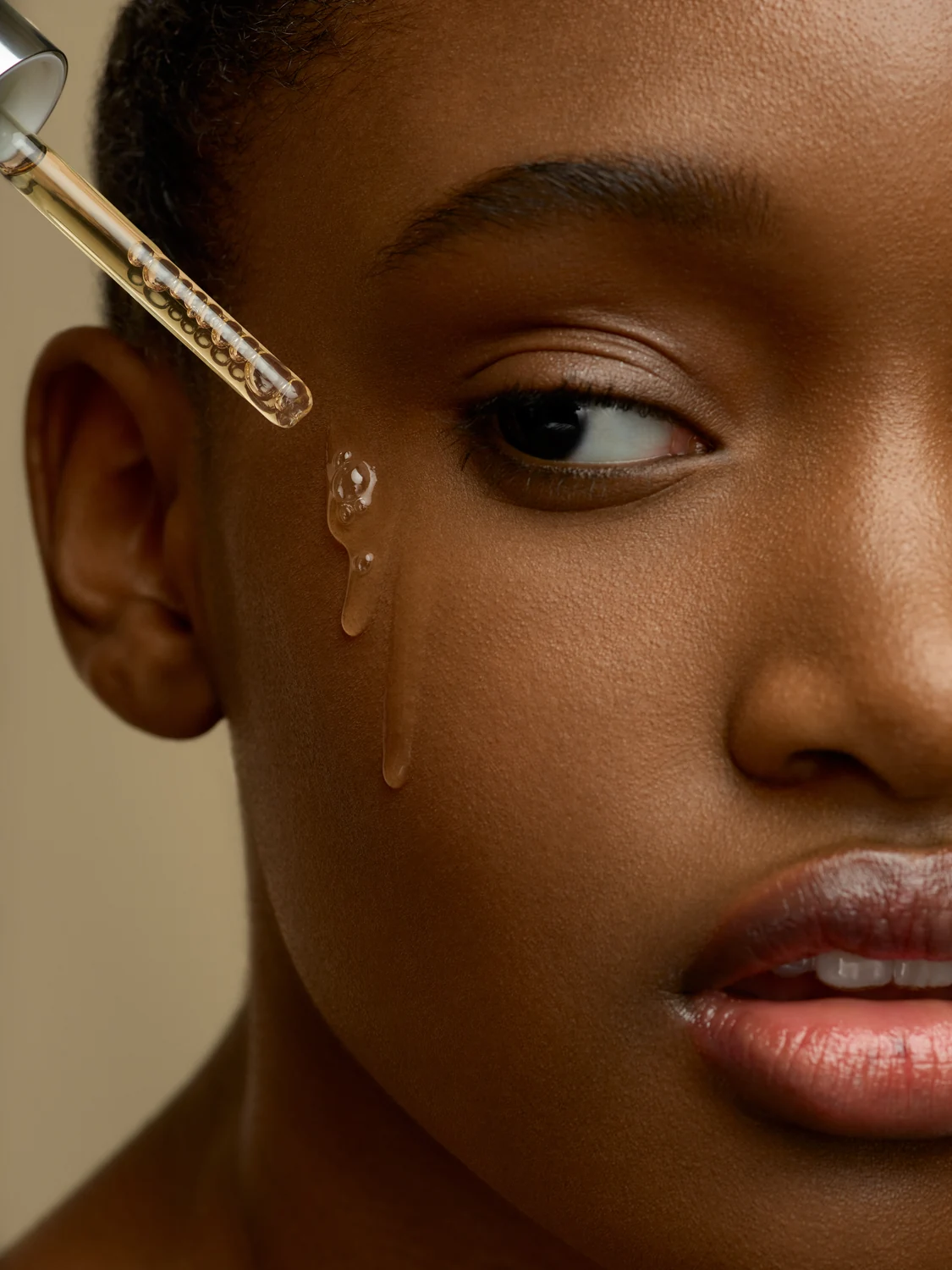
By placing a serum dropper beside the human face, the project refuses to separate the ritual from the person. The product is not presented as a detached object shot on a white seamless background; it belongs to the same visual world as skin, color, and touch. That decision gives the work editorial depth while still serving the needs of beauty storytelling.
Light, Surface, and the Warm Neutral Palette
A warm, restrained palette carries the series from portrait to detail study. Soft neutrals, golden highlights, and controlled shadows allow every shift in surface to register clearly. The result is a body of work that feels calm, intimate, and highly deliberate.
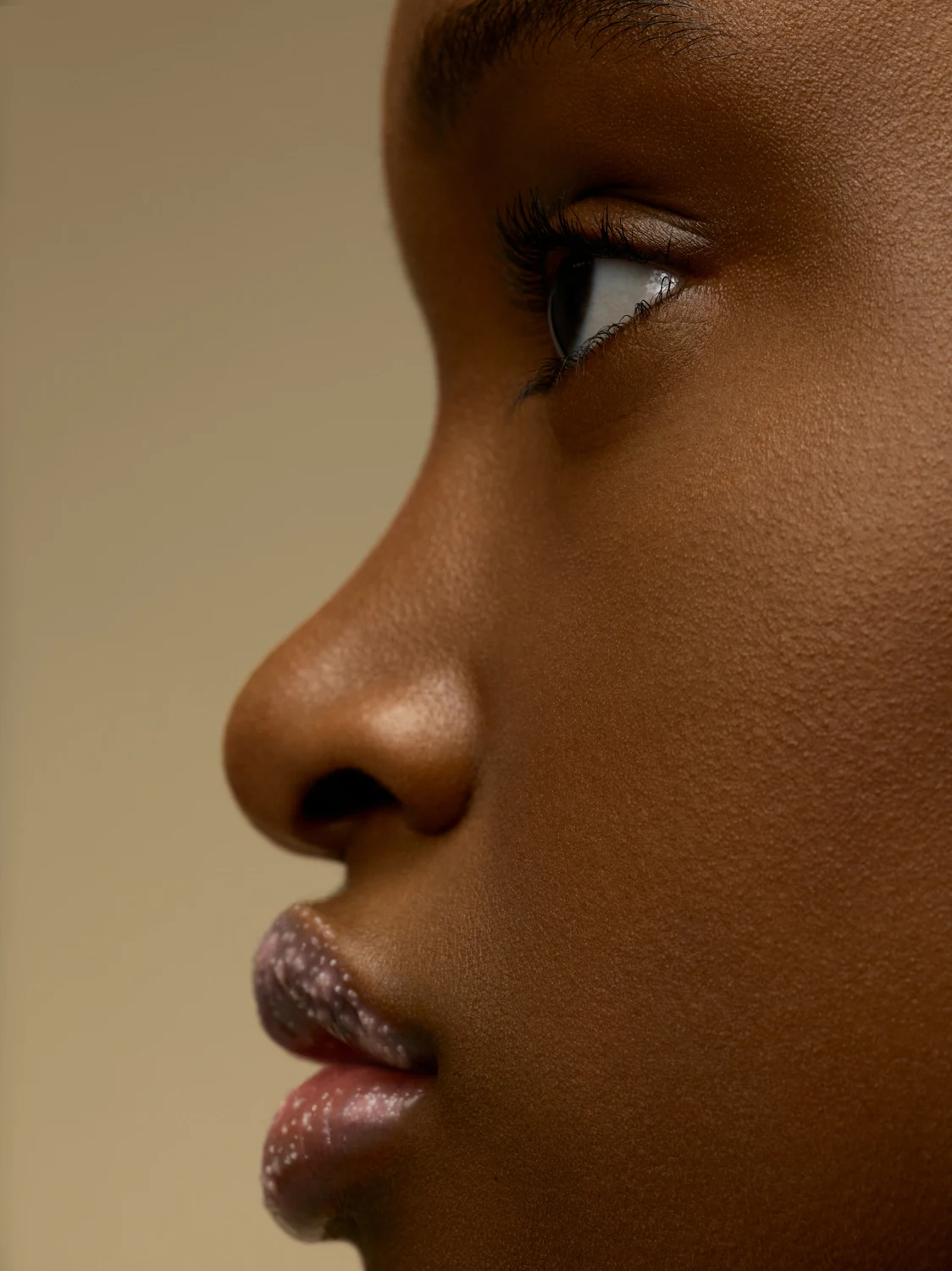
In the close facial studies, dewy skin becomes less a trend signifier and more a study of light on form. The cheek, temple, and brow hold illumination differently, making the face feel sculptural. Expression remains present, but it is joined by an equally strong focus on how skincare changes the movement of light across the skin.
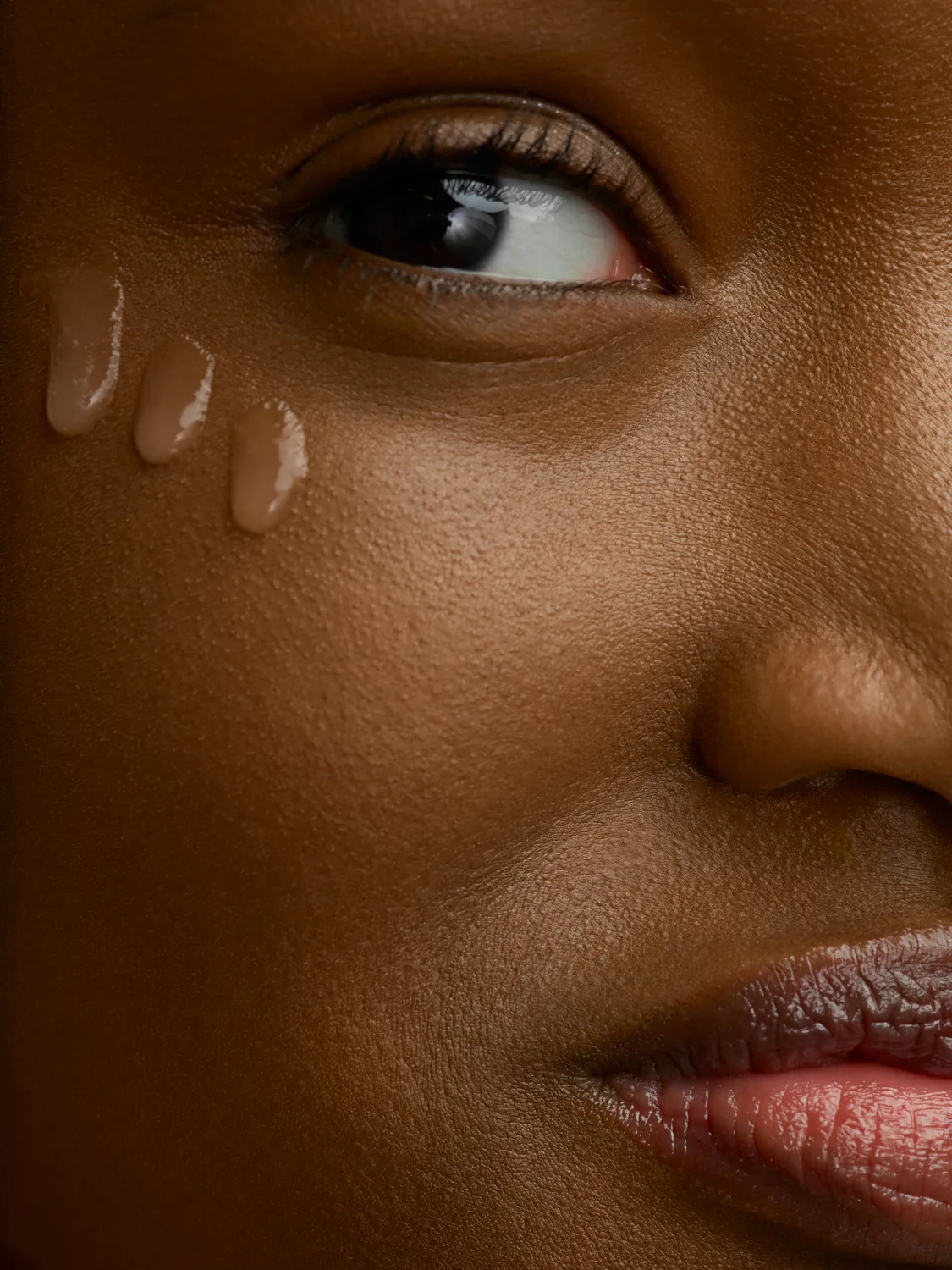
The serum-drop image extends that idea even further. Transparency, viscosity, and reflection become compositional tools. The drops sit on the skin as both product and design element, showing how a minimal intervention can transform the visual rhythm of a frame.
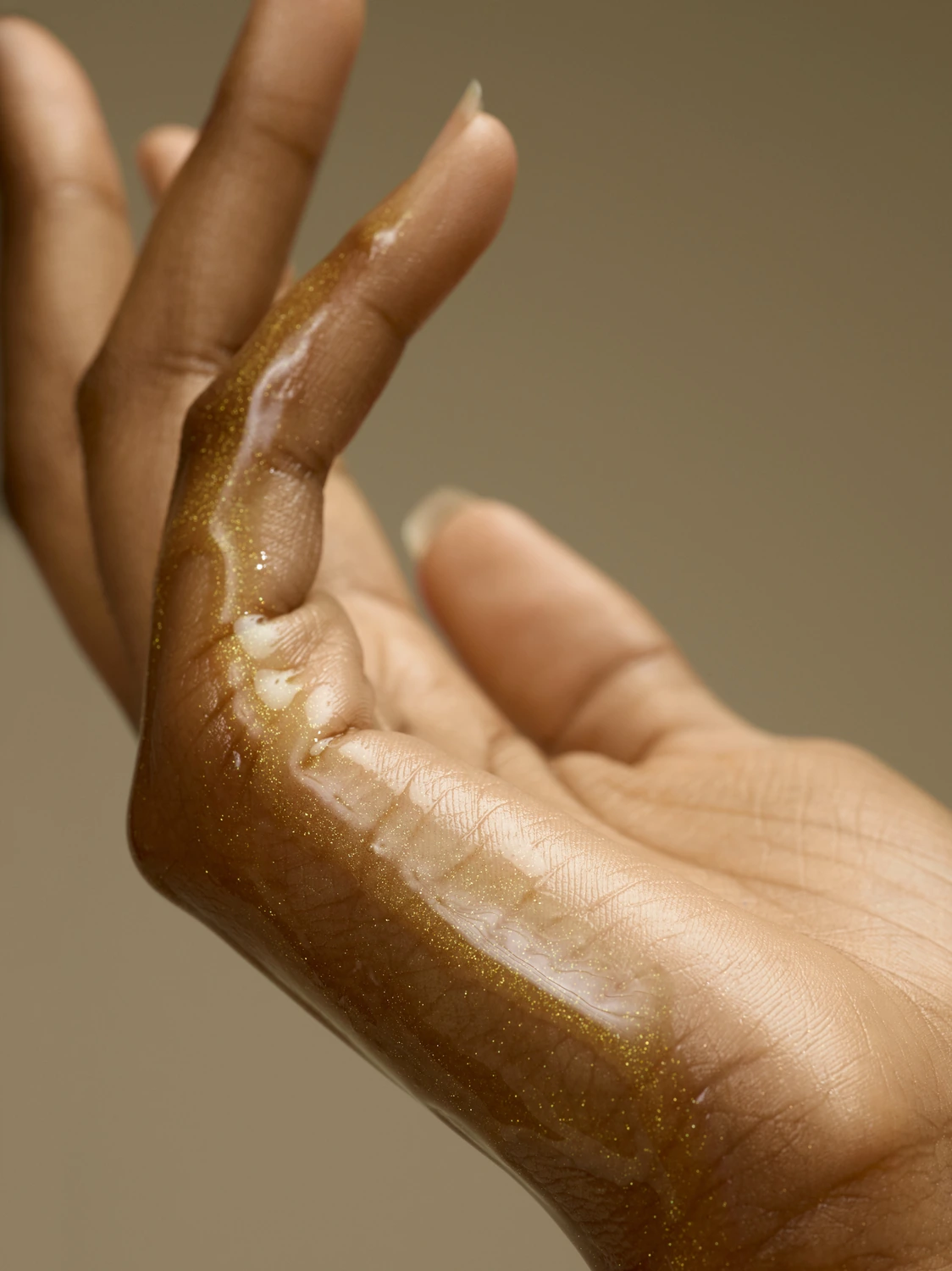
The reflective oil study on the hand brings the project to one of its clearest conclusions: skincare materials can be photographed with the same seriousness typically reserved for fabric, metal, or still life form. The oil is sensorial, but it is also structural. It traces the contours of the hand, catches warm highlights, and turns application into image-making.
Why This Approach Matters for Beauty Brands
What makes Skin / Texture / Ritual especially relevant for beauty brands is its ability to bridge editorial storytelling and campaign clarity. The photographs are visually refined enough to function as fine-art beauty images, yet they remain legible as brand-facing content because the products, finishes, and textures are always central to the frame. This balance is valuable for brands seeking imagery that feels elevated, contemporary, and emotionally resonant without losing product relevance.
The project also demonstrates how inclusive casting, natural skin texture, and a controlled palette can strengthen rather than dilute a campaign identity. By treating skincare as a visual experience made of touch, sheen, softness, and color, Maria Panina creates imagery that feels premium, modern, and memorable across editorial, digital, and commercial contexts.
Conclusion
Skin / Texture / Ritual presents skincare as more than a category of products. It becomes a study of surfaces, gestures, and the subtle exchanges between skin and light. Through inclusive casting, bare texture, reflective materials, and a warm neutral palette, the series builds a world in which beauty is intimate, tactile, and visually precise.
To explore the full project, visit Maria Panina’s skincare page. For more fine-art beauty, fashion, and editorial photography, visit mariapanina.art.